Your website may be the first interaction someone has with your organization. Before they read a single paragraph, click a button, or explore a service page, they are already forming an impression.
- Is this company credible?
- Can I find what I need?
- Does this website feel current and trustworthy?
- Will this be easy to use?
Those judgments happen quickly—and they aren’t based on design alone.
Your Website Is Your Digital Front Door
Your website is often the digital equivalent of your front door. A well-designed storefront can make someone want to walk in; a neglected or confusing one can make them keep walking.
The same is true online.
An outdated design, cluttered layout, confusing navigation, slow load time, or difficult mobile experience can undermine a visitor’s confidence before they ever encounter your actual content. And even a beautiful website can fall short if visitors can’t quickly understand what you do or where they should go next.
Good web design isn’t simply about making a website look good. It’s about creating an experience that communicates who you are, what you offer, and why visitors should trust you.
First Impressions Go Beyond Visual Design
Visual design still matters. Typography, color, imagery, spacing, layout, and branding all contribute to how visitors perceive your organization.
But modern websites have more to get right.
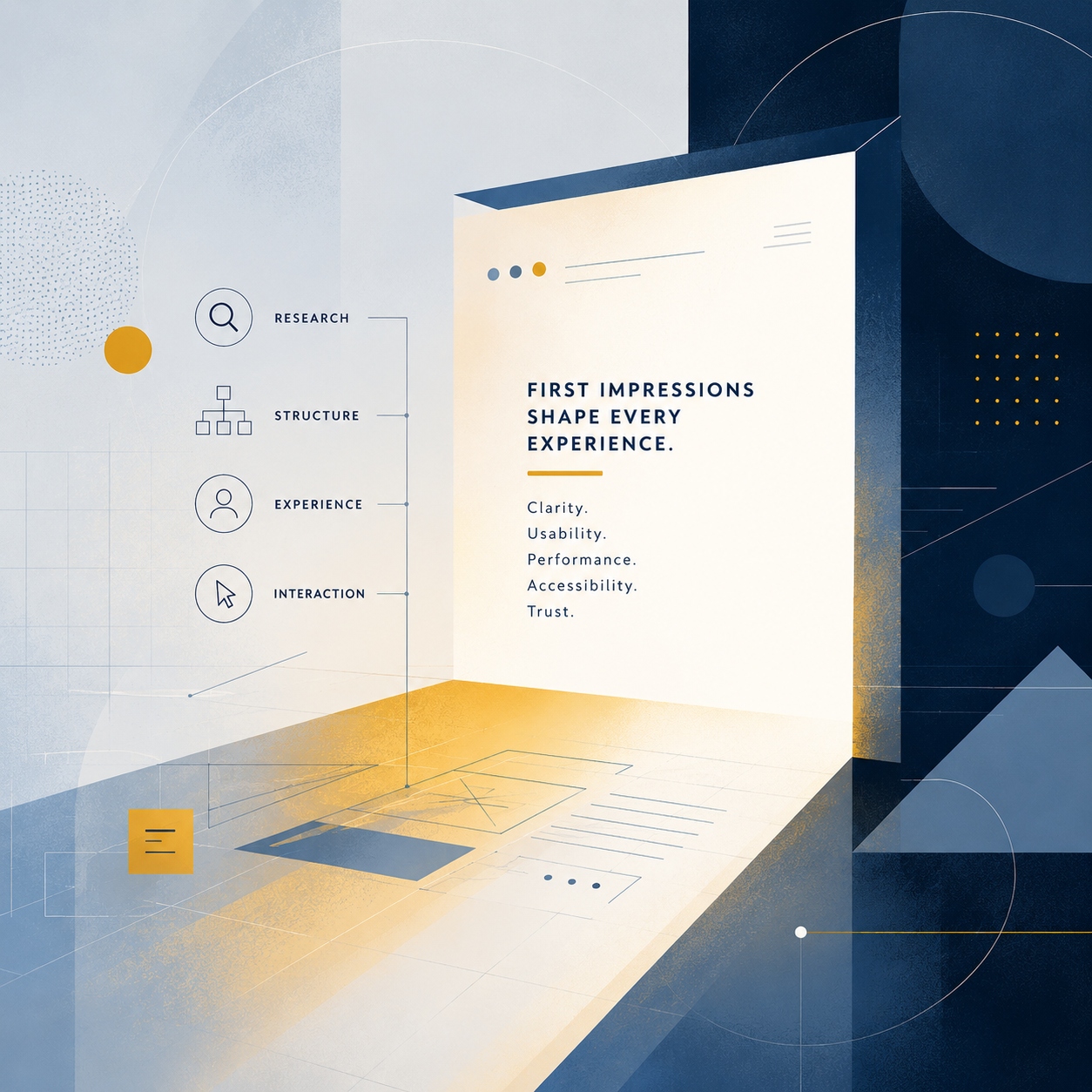
1. Clarity
Visitors shouldn’t have to work to figure out what your organization does.
Your homepage should quickly communicate your purpose and help visitors understand where to go next. Clear headlines, concise messaging, strong visual hierarchy, and meaningful calls to action can make the difference between someone exploring your site and someone leaving it.
2. Usability
A website can look impressive and still be frustrating to use.
Navigation should be intuitive. Links and buttons should be easy to identify. Forms shouldn’t ask for unnecessary information. Important information shouldn’t be buried beneath layers of menus or excessive scrolling.
The best interfaces often feel almost effortless because the decisions have already been made for the user.
3. Mobile Experience
A website doesn’t get to make a good first impression only on a desktop computer.
People visit websites from phones, tablets, laptops, large monitors, and everything in between. A modern website needs to adapt to different screen sizes while maintaining readable content, usable navigation, accessible controls, and a clear visual hierarchy.
Responsive design isn’t an optional enhancement anymore. It’s a fundamental part of the experience.
4. Performance
A beautiful website that takes too long to load is still a poor first impression.
Performance affects usability, accessibility, search visibility, and ultimately whether visitors stick around. Large images, unnecessary scripts, poorly optimized code, and excessive third-party resources can all contribute to a slower experience.
Performance should be considered during the design and development process—not treated as something to fix after launch.
5. Accessibility
A website should work for as many people as possible, including people who use assistive technologies or interact with websites in different ways.
Accessible color contrast, keyboard navigation, descriptive links, meaningful headings, alternative text, properly labeled forms, and thoughtful interaction design all contribute to a better experience.
Accessibility also tends to make websites easier for everyone to use. Clear structure and straightforward interactions benefit all visitors.
6. Trust
Visitors are constantly looking for signals that an organization is legitimate and trustworthy.
Professional branding helps, but trust can also come from clear contact information, authentic photography, customer stories, testimonials, case studies, security practices, accurate content, and a website that feels maintained and current.
Small details matter. Broken links, outdated information, inconsistent branding, or a footer that still references an old year can quietly erode confidence.
There Is No One-Size-Fits-All Design
One of the biggest mistakes in web design is assuming that every organization needs the same type of website.
A manufacturer, healthcare organization, municipality, nonprofit, software company, and professional services firm may all have completely different audiences, goals, content, and expectations.
That’s why effective web design starts with understanding the organization—not choosing a trendy design and trying to make the content fit afterward.
Before we start designing, we look at questions such as:
- Who is the website for?
- What are visitors trying to accomplish?
- What information matters most?
- What actions do we want visitors to take?
- What makes the organization different?
- What does the brand need to communicate?
- What accessibility and usability considerations need to be addressed?
- What technology and integrations will the website require?
The answers to those questions shape the design.
Design Should Support the Bigger Picture
Your website’s appearance is important, but it is only one part of a successful website.
The strongest websites bring design, content, technology, accessibility, performance, and strategy together. Each element should support the others rather than exist independently.
A striking homepage won’t help much if visitors can’t find your services.
Great content won’t perform if the page is difficult to navigate.
A technically sophisticated website won’t build trust if it feels outdated.
And a fast website won’t accomplish much if visitors don’t understand what to do next.
The goal isn’t simply to impress someone during their first few seconds on the site.
The goal is to make those first few seconds the beginning of a great experience.
Your Website Deserves More Than a Fresh Coat of Paint
A website redesign shouldn’t be about making a site look newer for the sake of looking newer. It should be an opportunity to reconsider how your organization presents itself and how your visitors experience it.
At Lanex, we approach web projects by looking at the whole picture—from strategy and user experience to design, development, accessibility, performance, and ongoing support.
Because your website is more than a collection of pages.
It’s often the first conversation you have with a potential customer, client, partner, employee, or member of your community.
Make those first few seconds count.